What Makes a School Truly Future-Ready?
posted on Jan 20, 2026
A closer look at how future-ready schools support deep understanding, flexible thinking, emotional growth, and learning that lasts beyond classrooms.
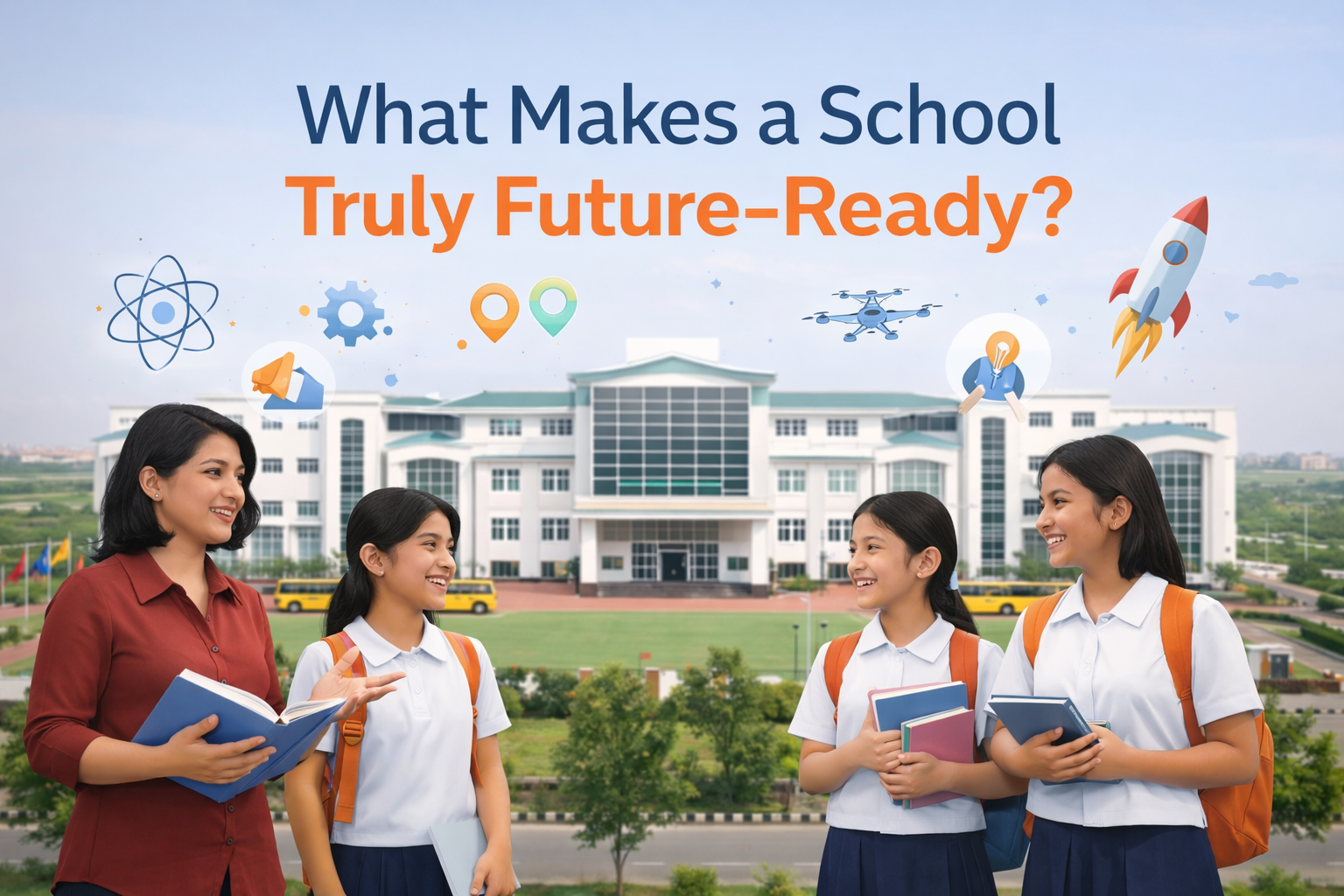
The expectations from schools have changed. Strong academics still matter, but they are no longer enough on their own. Students today are growing up in a world that is faster, more connected, and far less predictable than before. Schools are now expected to prepare students not just for exams, but for a lifetime of learning and change.
A future-ready school understands this shift. It focuses on how students think, how they learn, and how they adapt, rather than only on what they memorise.
The Gap Between Traditional Schooling and Today’s Reality
Traditional schooling was designed for a stable world. Knowledge changed slowly, career paths were clearer, and success was often measured by exam results alone. That structure struggles to meet today’s realities.
Students now need to:
- understand ideas deeply, not just recall them
- apply learning in unfamiliar situations
- adapt to new tools, roles, and expectations
- continue learning beyond formal education
A future-ready school begins by recognising that this gap exists and responds by rethinking the purpose of learning itself.
When Learning Prioritises Understanding Over Coverage
In many classrooms, progress is still measured by how much of the syllabus has been completed. Lessons move forward quickly to stay on schedule, even if clarity is lost along the way.
Future-ready learning values understanding over speed. Students are encouraged to ask questions, discuss ideas, and make sense of concepts before moving on. When learning is paced around clarity, students retain information longer and feel more confident using it.
This shift does not reduce academic rigour. It strengthens it by ensuring that learning is meaningful rather than mechanical.
Skills That Remain Relevant Beyond School
Knowledge evolves, but certain skills remain essential across time and professions. A future-ready school intentionally builds these skills as part of everyday learning.
These include:
- critical and logical thinking
- clear communication
- collaboration and teamwork
- adaptability and decision making
Such skills develop naturally when classrooms encourage discussion, group work, problem solving, and independent thinking. They are not treated as add-ons, but as part of how learning happens.
Teaching That Encourages Thought and Participation
In future-ready classrooms, learning is not one-directional. Teachers do more than deliver information. They guide, question, and support students as they think through ideas.
Teaching focuses on:
- encouraging curiosity
- inviting multiple perspectives
- helping students explain their reasoning
- allowing space for exploration and reflection
When students are encouraged to participate actively, they develop confidence in their thinking and take greater ownership of their learning.
Technology Used With Purpose, Not for Appearance
Technology plays an important role in modern education, but it does not define future readiness on its own. Devices and digital tools are effective only when they support learning.
In future-ready schools, technology is used to:
- build digital awareness and literacy
- support research and exploration
- encourage creativity and problem solving
- teach responsible and safe online behaviour
The focus remains on thinking and understanding, with technology acting as a support rather than a distraction.
A School Environment That Supports Expression and Confidence
Students learn best in environments where they feel respected and comfortable sharing ideas. A future-ready school pays close attention to classroom culture.
Such environments encourage:
- open and respectful discussion
- learning from mistakes without fear
- steady and supportive teacher-student relationships
- participation that feels natural, not forced
When students feel heard, confidence grows steadily, and engagement becomes part of everyday learning.
Learning Experiences Beyond Academic Subjects
Education extends beyond textbooks and classrooms. Experiences outside academic lessons play a vital role in student development.
Future-ready schools provide exposure through:
- sports and physical activity
- arts and creative expression
- clubs, competitions, and collaborative initiatives
- hands-on projects connected to real situations
These experiences help students build resilience, discipline, creativity, and a sense of responsibility.
Emotional and Social Development as Part of Education
Students bring emotions, relationships, and personal challenges into school every day. Ignoring this affects how they learn and interact.
Future-ready schools recognise the importance of:
- emotional awareness
- healthy peer relationships
- managing pressure and change
- developing empathy and respect
Supporting emotional and social development helps students remain balanced, focused, and confident.
Assessment That Supports Growth, Not Anxiety
Traditional assessment systems often reward memory and speed, which can increase stress without improving understanding. Future-ready schools rethink this approach.
Assessment focuses on:
- regular and meaningful feedback
- understanding and application of concepts
- individual progress over time
- learning from mistakes
This helps students view assessment as part of learning rather than something to fear.
What Truly Defines a Future-Ready School
A future-ready school is not defined by labels, trends, or facilities. It is defined by how well it prepares students to think clearly, adapt confidently, and continue learning throughout life.
When learning prioritises understanding, teaching encourages thought, skills develop naturally, and students feel supported, schools move closer to real future readiness. The goal is not to predict the future, but to prepare students to face it with confidence and clarity.
Frequently Asked Questions
What is a future-ready school?
A future-ready school prepares students with the mindset, skills, and understanding needed to adapt, think critically, and learn continuously.
Why is future-ready education important today?
Because students face a rapidly changing world where adaptability, problem solving, and communication matter as much as academic knowledge.
How is learning different in a future-ready school?
Learning focuses on understanding, application, and thinking rather than memorisation and syllabus completion.
Does technology alone make a school future-ready?
No. Technology supports future readiness only when it is used thoughtfully to enhance learning.